Why I built it
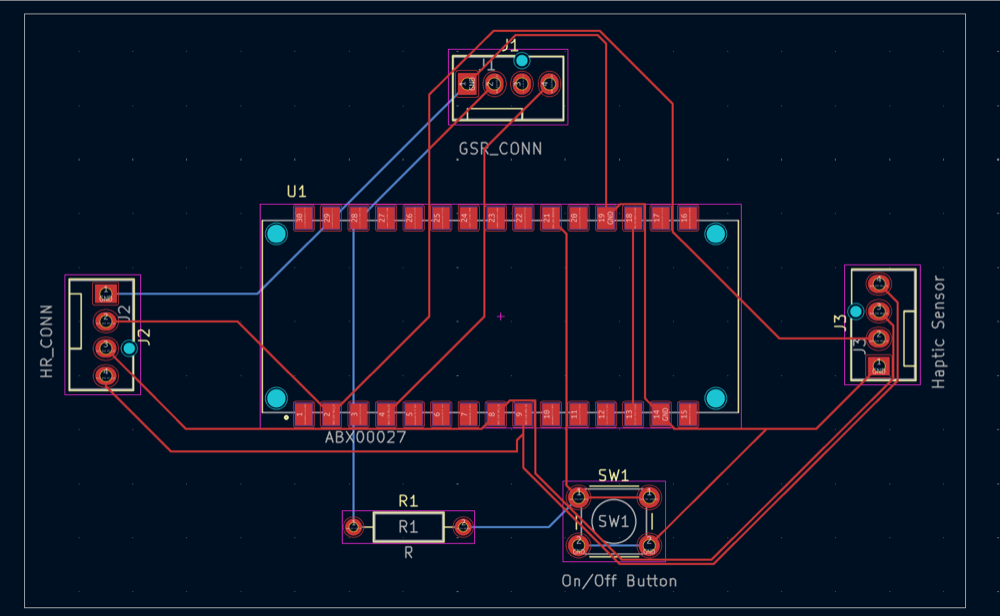
It was our team's junior design project. We took the device from customer needs through requirements, design reviews and verification testing, and documented every step in a design history file.
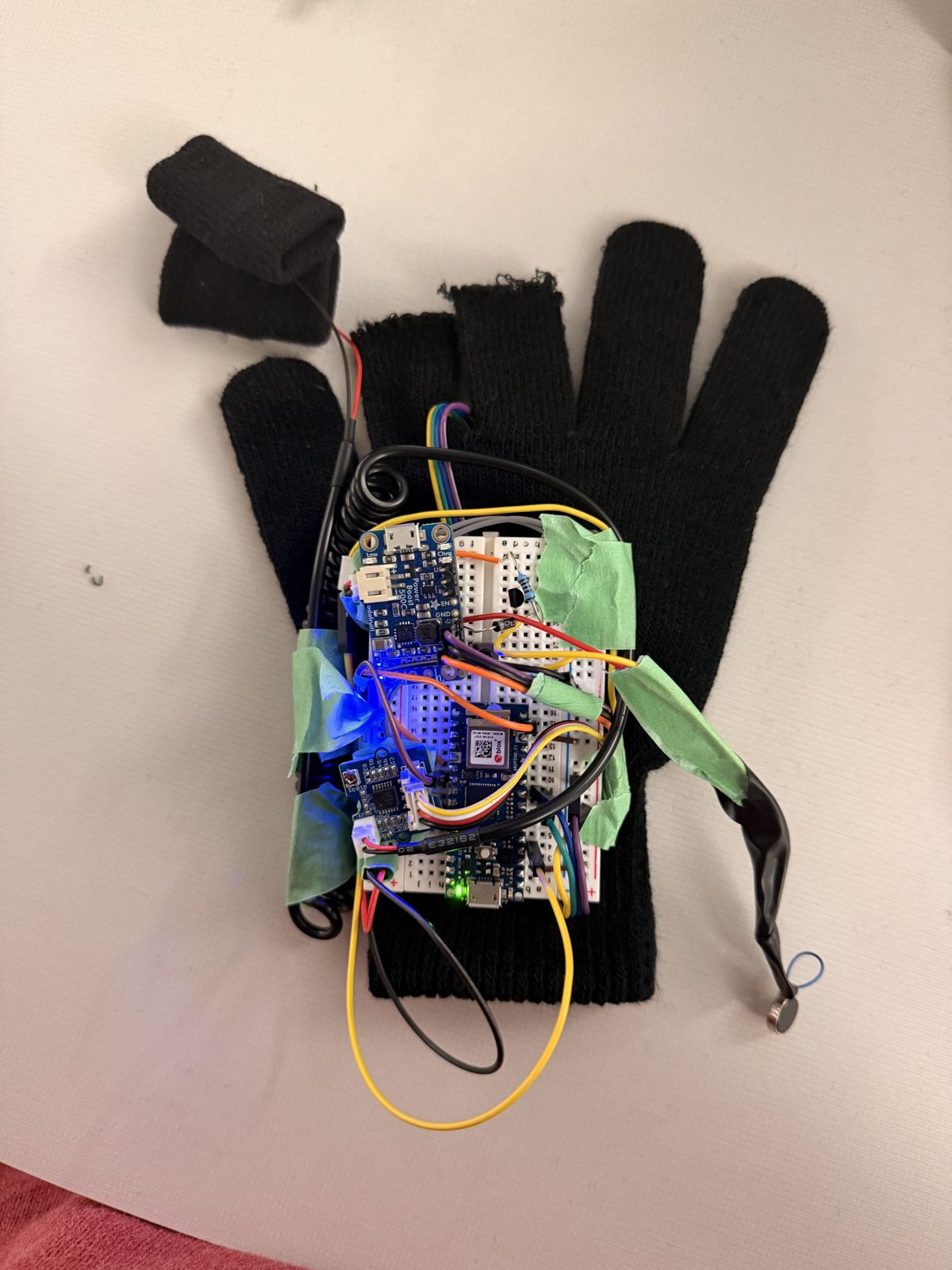
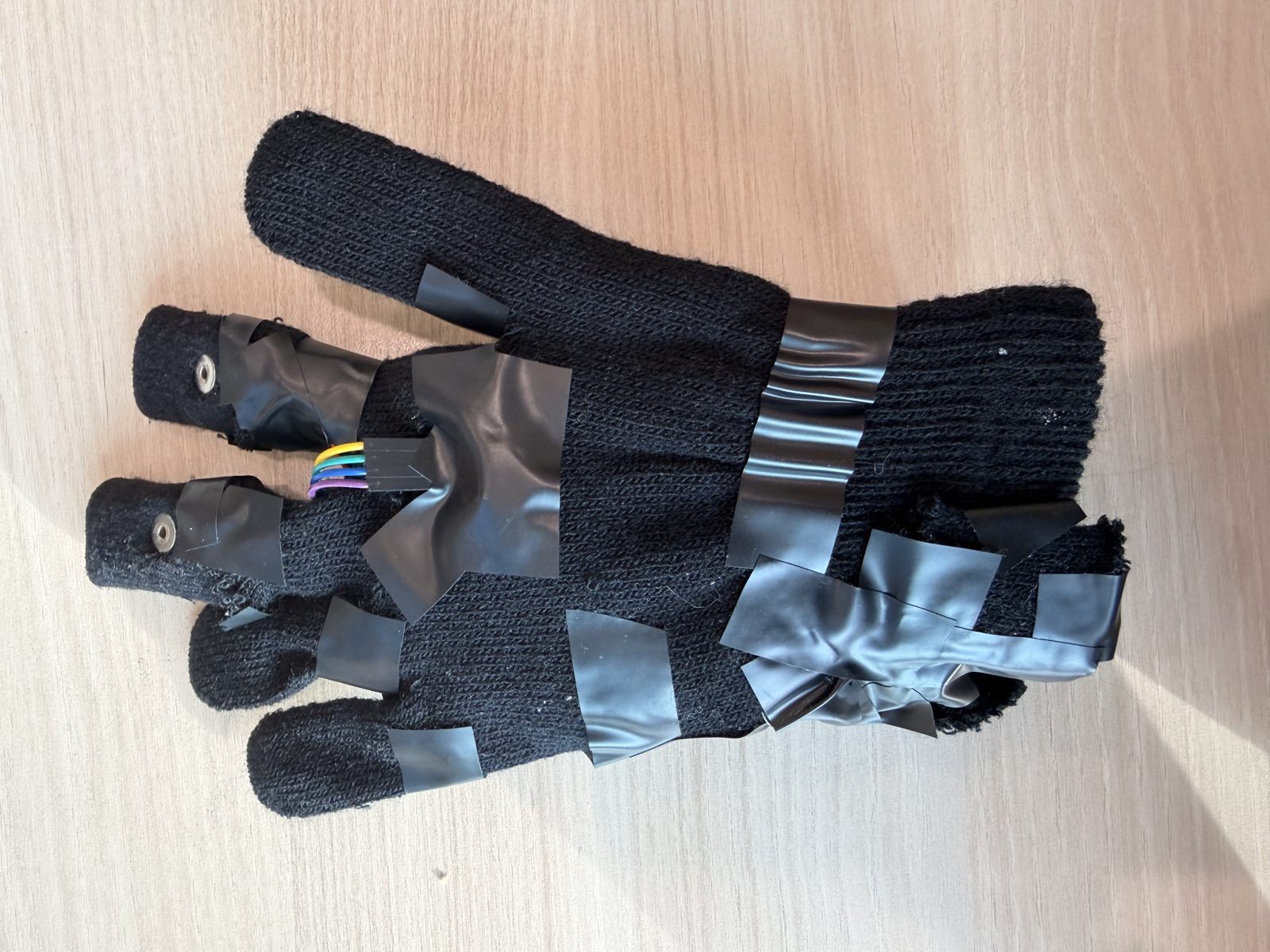
We picked anxiety because so many people live with it, and we wanted the monitor to have a seamless form factor. We chose a glove over a watch or a wristband because it held the skin-conductance electrodes firmly against the fingertips and left room on the back of the hand for the electronics.
The hard part
The hardest part was getting continuous, reliable readings from the sensors. All of the filtering ended up in software. The sensor library removes the steady (DC) part of the optical signal and applies a 4-point moving average, which together act roughly like a band-pass filter. On top of that, my firmware throws away readings the library marks invalid, averages the last six heart-rate values, and then smooths the result, moving less the bigger the jump, so a single bad reading can't swing the heart rate.